If your engineering business buys steel or aluminium from overseas, can your team tell which goods are in scope, who is responsible for the import and where to find the supporting records?
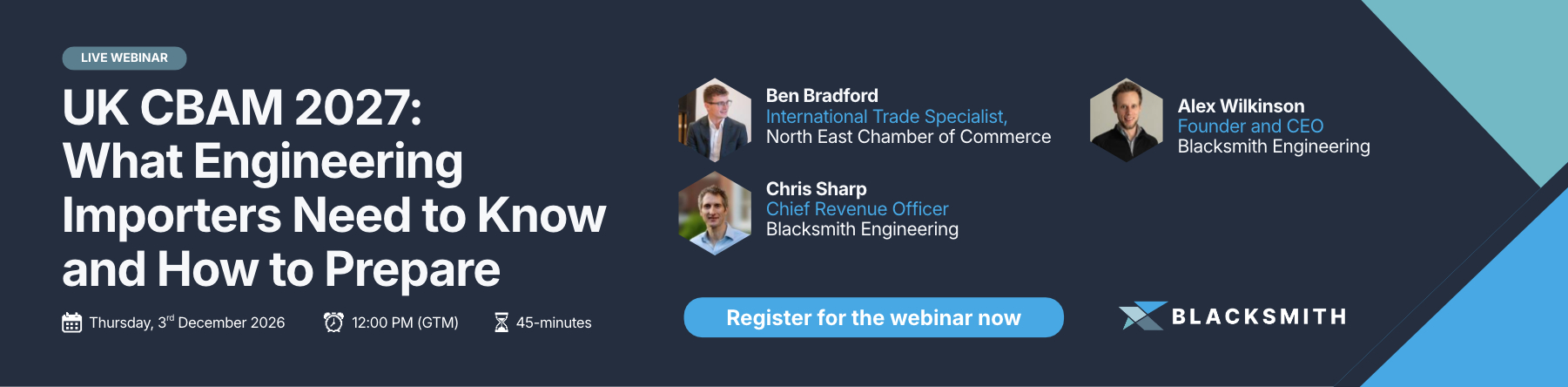
The UK Carbon Border Adjustment Mechanism (CBAM) comes into effect on 1 January 2027. It applies to selected imported goods, including certain iron, steel and aluminium products. In this live Blacksmith Engineering panel, you’ll learn how to check whether your imports are in scope and what your team can do before January.
What you’ll learn
How to check commodity codes, identify the responsible importer and understand when the £50,000 registration threshold matters.
Which import records to keep from January and when you may need emissions information from suppliers.
Where material and supplier records can be hard to trace on offshore engineering projects, with a practical perspective.
How to link part records, purchase orders and supplier documents so engineering and procurement teams can find the evidence they need.
Who should attend
Engineering, procurement, operations and supply chain teams that import materials directly or need to understand how UK CBAM could affect their suppliers.
International Trade Specialist, North East Chamber of Commerce
Ben has a background in law and international trade and holds a Level 4 Customs Practitioner Award. He’ll explain which goods are in scope, who is responsible for the import and what businesses should check first.
Alex is an engineer who founded Blacksmith Engineering and developed IMPS around the needs of project-based engineering teams. He’ll show how teams can connect part, purchasing and supplier records to make supporting documents easier to find.
Chris has more than 20 years’ experience in business software. He’ll chair the panel and connect the regulatory discussion to the decisions engineering and procurement teams need to make before January.
We use cookies to run our site and, with your consent, to understand traffic from LinkedIn and measure our marketing.
See our Privacy Policy for details.
Cookie preferences
Choose which cookies we are allowed to use. You can change this any time from the "Cookie preferences" link in our site footer.
Strictly necessaryRequired for the site to function (security, form submissions). Always on.
Analytics and advertisingIncludes the LinkedIn Insight Tag, used to measure our LinkedIn campaigns. Off by default.